


Baseball vs. Softball Catchers Gear: Key Differences You Need to Know
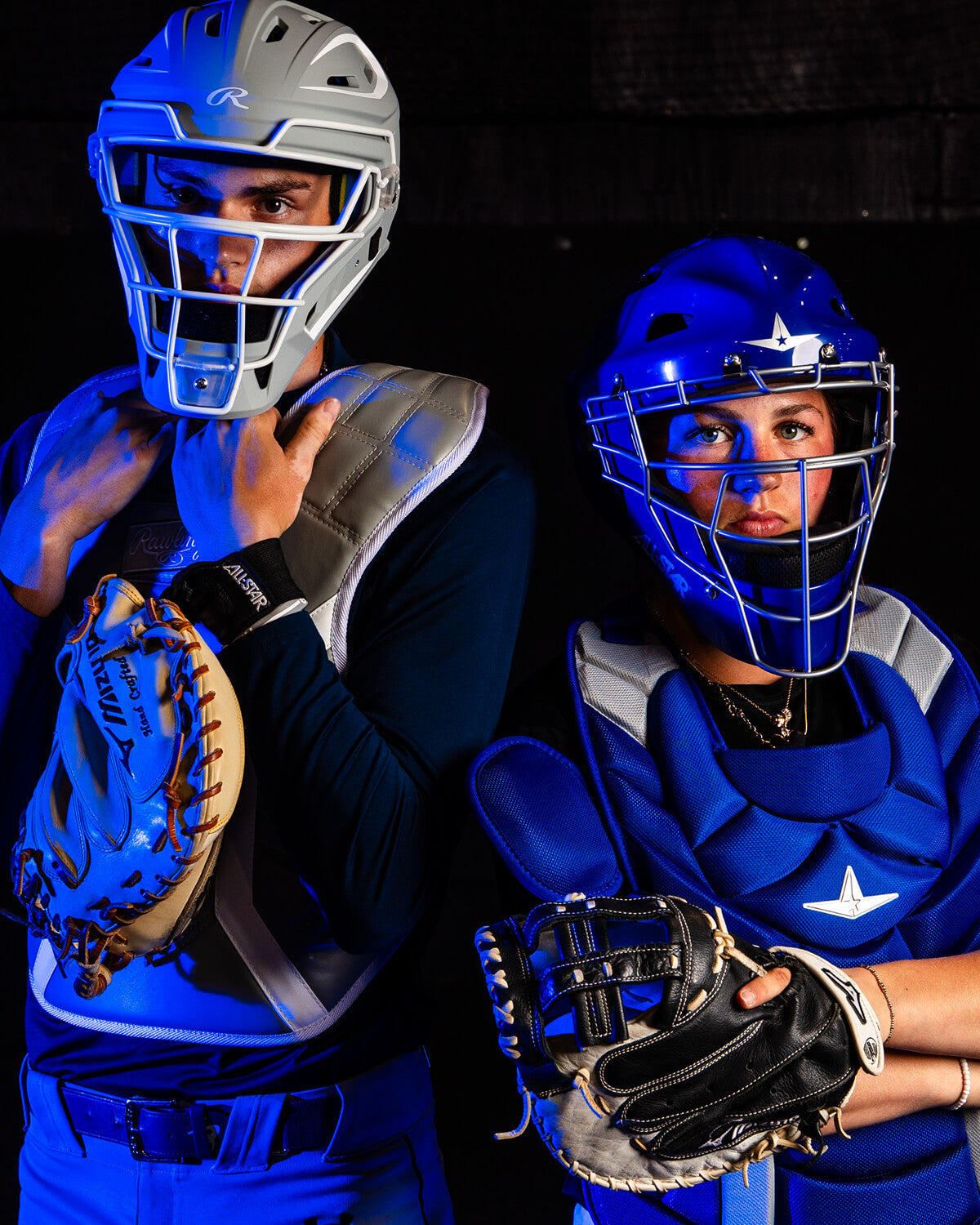
Behind the plate, the catcher is the engine of the defense. Every pitch, blocking play, and pop fly demands quick reactions, relentless toughness, and absolute protection. But when it comes to shopping for protective equipment, one common question surfaces in dugouts everywhere: What are the differences between baseball and softball catcher's gear, and are they really interchangeable?
While baseball and fastpitch softball catchers perform similar duties, the physical demands of each sport—along with player anatomy and ball dynamics—require distinct gear designs. In this guide, Field General breaks down the key differences in chest protectors, leg guards, catchers' helmets, and mitts so you can make the safest, most performance-driven choice.
While a NOCSAE-approved baseball helmet can technically be worn for softball, using a baseball chest protector, leg guards, or mitt for fastpitch softball compromises both safety and mobility. Fastpitch gear is specifically engineered for female anatomical proportions and high-velocity low-rise ball impacts, while baseball gear is built for larger male torso frames and overhand ball trajectories.
Chest Protectors: Anatomic Fit & Break Points

The chest protector showcases the single biggest difference between baseball and softball catchers gear.
| Feature | Baseball Chest Protectors | Fastpitch Softball Chest Protectors |
| Shape & Profile | Flat & Broad Profile — designed for broader, flatter male torsos with wider shoulder coverage. | Anatomical Shaping — specifically engineered for the female body, with break points and padding contoured to fit over the bust line without shifting, flattening, or creating air gaps. |
| Shoulder & Waist Fit | Groin Extensions & Length — generally longer to provide full torso coverage down to the waist/groin area. | Narrow Shoulders & Taper — tailored with narrower shoulder width and tapered waistlines to allow full arm mobility for quick throwing mechanics. |
| Padding & Flex | Deadening Foam Tech — denser, deadening foam layers optimized to absorb impacts from smaller, heavier baseballs (5 oz) traveling at high overhand velocities. | Flex Lines — break lines positioned to allow a comfortable crouch without pushing the top of the protector up into the catcher’s neck or throat. |
Leg Guards: Knee Positioning & Shin Taper
 Leg protection must balance impact absorption with sprinting agility. The design differences here focus heavily on body proportion and squat geometry.
| Feature | Baseball Leg Guards | Fastpitch Softball Leg Guards |
| Knee Cup Fit | Broader, deeper knee socket tailored for wider male bone structure. | Narrower, tighter knee cradle designed for female knee geometry. |
| Length & Shin Taper | Longer shin length with wider side coverage. | Shorter, highly tapered shin channels to fit closer to the calf. |
| Knee Caps | Commonly triple-knee design for higher thigh protection in deep squats. | Typically double-knee or flexible single/double design for agility in lower stances. |
| Harnessing | Wider strap placement designed for thicker baseball pants/legs. | Tighter, criss-cross harness systems to prevent slipping on slimmer calves. |
Catchers Helmets & Masks: Vision & Sightlines
At first glance, hockey-style catchers helmets for baseball and softball look almost identical. However, sightlines and cage configurations differ subtly based on pitch physics:
| Feature | Baseball Catcher Masks | Softball Catcher Masks |
| Wire Grid / Bar Spacing | Feature tighter wire grid spacing across the faceguard to ensure the smaller 9-inch baseball cannot pass through or wedge into the cage upon direct impact. | A fastpitch softball is 12 inches in circumference (compared to a 9-inch baseball). As a result, softball masks feature slightly wider vertical and horizontal bar spacing in non-impact zones to maximize peripheral vision without allowing a 12-inch ball to penetrate the cage. |
Catchers Mitts: Pocket Depth & Webbing
You cannot interchange a baseball catcher's mitt and a fastpitch softball catcher's mitt. The physical size of the ball dictates the entire glove construction:
| Feature | Baseball Catchers Mitt | Fastpitch Softball Catchers Mitt |
| Pocket Size | Has a shallower pocket with thick perimeter padding (the thumb and pinky wire/board) designed to absorb high ball speed and allow lightning-fast ball transfers. | Features a significantly deeper pocket and wider web to securely catch a 12-inch softball. |
| Hand Opening | Built with a larger hand stall suited for male adult or youth male hands. A 12-inch softball simply will not sit properly in the pocket of a baseball mitt. | Designed with a smaller wrist opening (often featuring an adjustable velcro or pull-strap system) and narrower finger stalls to fit a female hand securely. |
Differences Between Baseball and Softball Catchers Gear
| Category | Baseball Catchers Gear | Softball Catchers Gear |
| Primary Focus | Broad chest coverage, high-velocity overhand impact deadening. | Contoured ergonomic fit for female athletes, mobility, and ball size adaptability. |
| Chest Protector Fit | Flat, broad, longer extension. | Tailored bust breaks, narrow shoulders, tapered waist. |
| Leg Guard Fit | Longer, triple-knee options, wider calves. | Shorter shin lengths, double-knee options, snug calf wrap. |
| Mask Grid Spacing | Tighter wire gaps for 9-inch ball protection. | Slightly wider sightlines optimized for 12-inch ball size. |
| Mitt Pocket | Shallow, ultra-thick padding for quick transfers. | Deep pocket, wide web, smaller wrist/finger stalls. |
Gear Up with Purpose at Field General
While baseball and fastpitch softball catchers share the same fearless mindset behind the plate, their equipment needs are fundamentally different. Investing in gear designed specifically for your sport ensures maximum protection, superior comfort, and the freedom of movement required to command the field.
Explore Field General’s full lineup of premium baseball and fastpitch catchers gear—engineered to help you lock down every inning with confidence.
Read more
Ever wondered how fast catchers can put their gear on before the umpire calls "Play ball"? Between-inning timers move fast, and an elite backstop needs to strap on their equipment in 45 seconds o...
Catchers take a beating behind the plate, and so does their equipment. From sweat and dirt to game-day grime, keeping your setup clean is crucial for protection, hygiene, and gear longevity. In thi...
Leave a comment
All comments are moderated before being published.
This site is protected by hCaptcha and the hCaptcha Privacy Policy and Terms of Service apply.